


The Willows
The Willows (1907) by Algernon Blackwood (pdf,301kb)
What it’s about
In The Willows, two men are canoeing down the flooding Danube river. They started at the Danube’s source, where it was just a trickle of water in the Black Forest in Germany, and are heading down the river’s length to the Black Sea.
The story’s told in first person by the unnamed protagonist. His friend is also unnamed, only referred to as ‘the Swede’.
The story starts after they’ve left Vienna, after about a month and a half of travelling down the river. The floodwaters push them into a “wilderness of islands, sandbanks, and swamp-land beyond—the land of the willows”.
They eventually pull up onto a small island that’s covered in stunted willows. The wind is monstrous—strong and loud—and the island is slowly falling apart as the flood waters rise and the sandy banks break away.
They decide to stay the night. They’re experienced canoeists, so they’re not worried; they make sure the canoe and their things are close to their tent in case they have to leave in a hurry in the night.
They see a giant otter that they first think is a dead man, then a boatman who’s very out of place in this area. Although they feel uneasy, they use logic to explain these things and bunk down for the night.
Suffice to say, that everything that they see and hear and experience is not scientifically-explainable, although the narrator gives it a good try.
About Algernon Blackwood
Blackwood was huge nature fan and his awe and respect for nature shines through his fiction. He spent as much time as he could camping, fishing, and just hanging out in it. He always believed that there was more to life than what we could see.
In a letter to a young writer, Blackwood said that all his books were “more or less autobiographical”, so it seems that his protagonists had a lot of himself in them.
Blackwood’s narrative rhythm is something to behold if you’ve never read any of his work before. If you think you’re getting something stuffy and formal because of when it was written, you’re way off track.
His sentences and paragraphs are long but full of alliteration—“waste of wild waters”, “whispering willows”—and similar-sounding words—lots of “ing” words, like “bearing”, “shouting”, “dashing”, “whirling”—so his prose flows like a song as it bubbles through your mind.
He doesn’t use short words, but he chooses his words carefully to create the atmosphere, the suspense, the dread, and the magical picture in your head so you see what he’s describing clearly.
In the very first sentence, we get “a region of singular loneliness and desolation” and “a vast sea of low willow bushes”.
Later on, we have birds and animals “haunting the shores” and when the narrator starts to feel uneasy, it’s “a curious feeling of disquietude, almost of alarm”.
His words show us the majesty and loneliness of the wilderness, and brings it alive. He shows us how unwelcome it can make you feel, like you’re trespassing somewhere you shouldn’t be.
The words also move the story along at a pace to match the flooding river and he increases the dread factor, little by little, almost so you’re not aware of it until it reaches its crescendo.
For more information, see: Algernon Blackwood, Author
Other books you might like if you like this story
You might like to give the following books a go.
The Hollow Places (2022)
By T Kingfisher
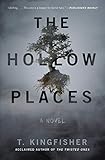 The Hollow Places was inspired by Blackwood’s The Willows.
This is a novel of fun and horror rolled up together that puts modern elements into the Blackwood’s premise.
Recently divorced and staring down the barrel of moving back in with her parents, Carrot really needs a break. And a place to live. So when her Uncle Earl, owner of the eclectic Wonder Museum, asks her to stay with him in exchange for cataloguing the exhibits, of course she says yes.
The Wonder Museum is packed with taxidermy, shrunken heads, and an assortment of Mystery Junk. For Carrot, it s not creepy at all: she grew up with it. What s creepy is the hole that s been knocked in one of the museum walls, and the corridor behind it. There s just no space for a corridor in the museum s thin walls or the concrete bunker at the end of it, or the strange islands beyond the bunker s doors, or the whispering, unseen things lurking in the willow trees.
Carrot has stumbled into a strange and horrifying world, and They are watching her. Strewn among the islands are the remains of Their meals and Their experiments.
Algernon Blackwood’s The Willows (2019)
Adapted by Nathan Carson and illustrated by Sam Ford
 Algernon Blackwood’s The Willows is a graphic adaptation of Blackwood’s The Willows.
Starlight Man: The Extraordinary Life of Algernon Blackwood (2019)
By Mike Ashley
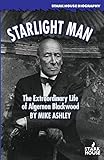 Starlight Man: The Extraordinary Life of Algernon Blackwood is an autobiography of Algernon Blackwood first published in 2001 and updated in 2019.
The Empty House
The Empty House is a ghost horror short story.
The story is around 6,300 words and was first published in Blackwood’s 1906 story collection The Empty House and Other Ghost Stories.
Read it here: Revisiting the Classics: The Empty House (1906)
The Occupant of the Room
The Occupant of the Room is a psychological horror short story by Algernon Blackwood.
The story is around 3,500 words and was first published in 1909 in Nash’s Magazine. It was also included in Algernon’s 1917 story collection Day and Night Stories.
Read it here: Revisiting the Classics: The Occupant of the Room (1909)
Episodes Before Thirty
Episodes Before Thirty is a memoir written in the early 20th century.
Read it here: Episodes Before Thirty by Algernon Blackwood (pdf,1.1Mb)


